
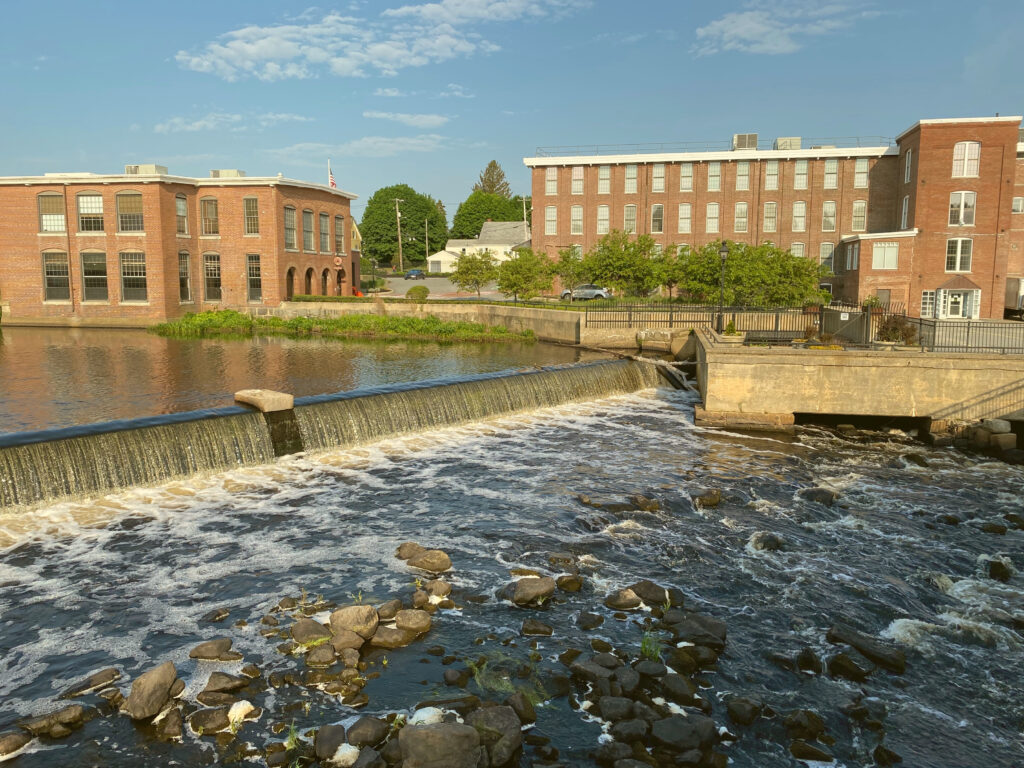
If you’ve been following IRWA for any time at all, you’ve probably heard us talk over and over about our top two priorities to protect and restore the health of the river: water withdrawals contributing to low flows and dam removal. And as we make inroads on both of these issues, we’ve increasingly gotten the question about how they are related.
In short: Will dam removal exacerbate the problem with low flows in the river?
The short answer: No! Fortunately, the ecological benefits of dam removal are almost entirely independent of the water supply issue. Therefore, we are able to pursue these two solutions simultaneously instead of having to wait for resolution on one before tackling the second.
The longer answer requires a bit more explanation but read on for a full explanation of how dam removal intersects with low flows.
First of all, it’s important to note that most of the time, our river has plenty of water in it to support fish and other native species. However, the Ipswich Mills Dam blocks passage all the time. By leaving the dam in place, we don’t offer fish populations the opportunity to rebound in the years when there IS plenty of water in the river. The types of migratory fish that are most-impacted by the dam swim upriver to spawn in freshwater in the spring. Juveniles then make their way out to the ocean to mature for 3-5 years before returning to coastal rivers themselves. Each year that migratory fish are able to make their way up river and spawn represents a significant ‘generation’ of new juveniles contributing to overall population health. Removing the Ipswich Mills Dam will immediately open up spawning habitat along the Ipswich River and its tributaries under current flow conditions. [Our efforts to improve river connectivity included many other projects as well: a nature-based fish bypass at Willowdale Dam, the removal of the South Middleton Dam, and upgraded stream crossings throughout the watershed.]
So then moving on to the more complicated question: What happens in years when we do experience low-flows if the Ipswich Mills dam is gone?
The Ipswich River has an established problem of low flows, most commonly in the summer months when water withdrawals peak and drought conditions are typically most extreme. IRWA has documented that the river will run dry in these conditions, an ecological problem. However, the existence of the dam doesn’t do much to mitigate this problem. The section of the Ipswich River where water levels are affected at all by the Ipswich Mills dam extends from the dam, upriver about 1.2 miles, up to the railroad bridge. Water levels along this stretch will be impacted by dam removal, but nowhere else in the river will feel those effects.
Focusing in on this 1.2 miles of impacted area: Post-dam removal the water level next to the mill building will match what we currently see at the pedestrian bridge in downtown Ipswich. This section of the river fluctuates tidally so water levels will rise and fall twice a day. At low tide during periods of extreme low flows, the river will be at its lowest and you will likely see the banks temporarily exposed until high tide raises water levels again.
Importantly the impoundment behind the dam is not the oasis during drought that you might imagine it to be. During periods of extreme low-flows, the impoundment becomes stagnant and hot, with low oxygen levels. Native fish avoid these conditions and instead will seek out cold groundwater seeps and shaded pools to wait out periods of low flows. Removing dams enables fish to freely move where they need to in order to find the ideal habitat during times of stress for their particular needs (i.e. cool and oxygenated).
Rest assured that reducing the periods of extreme low flows remains a top priority for IRWA. You can read more about our advocacy efforts at the state house and with the North Shore Water Resiliency Task Force. We are not distracted from this critical work by dam removal but rather are firing on all cylinders to move both projects forward simultaneously, making headway on restoration of our native fisheries AND improving the future resiliency of our beloved Ipswich River!